

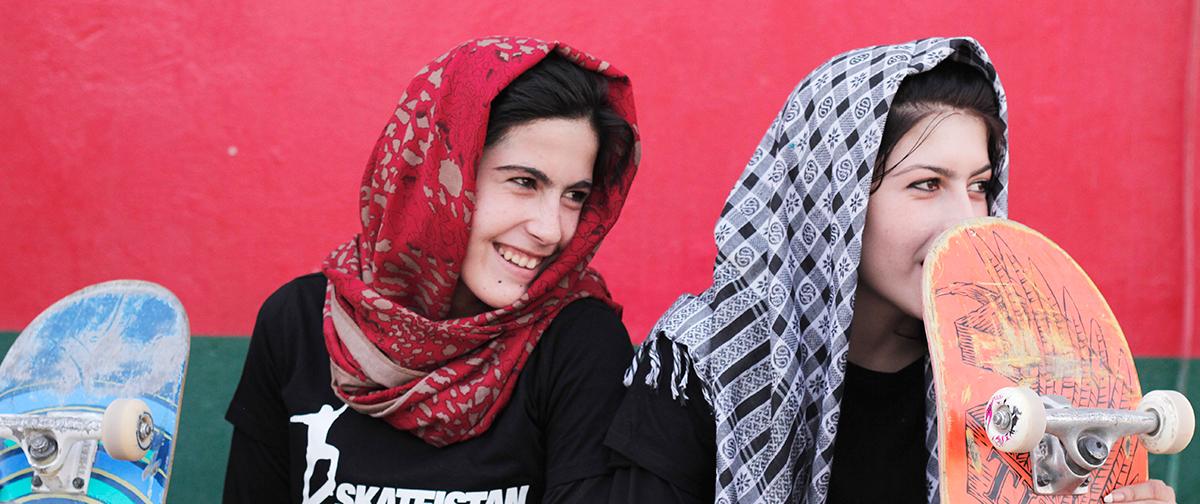
There are a lot of different ways you can run skateboarding programs, from loose sessions with skateboards that kids can borrow (loaner-board sessions), to structured skateboarding lessons focusing on life skills. The way you run your skate programs will depend on the aims of your project or organization, who your participants are, and what resources and infrastructure you have available. If you're wondering how to teach skateboarding safely then this is the place to start!
Skateboarding programs usually:
Work with children’s comfort levels:
Other Safety Tips:
For more ideas and best practices, check out the Goodpush Child Protection toolkit.
Rules
Each skate projects should have its own rules. The students, staff and visitors have to act according to those rules. The rules should be adapted to whichever community you are working in. Here’s an example of some typical skatepark rules.
Tip: Have a whiteboard or other signage where you can post information about your programs, including the session times, emergency service numbers, and contact info for people who want to join.
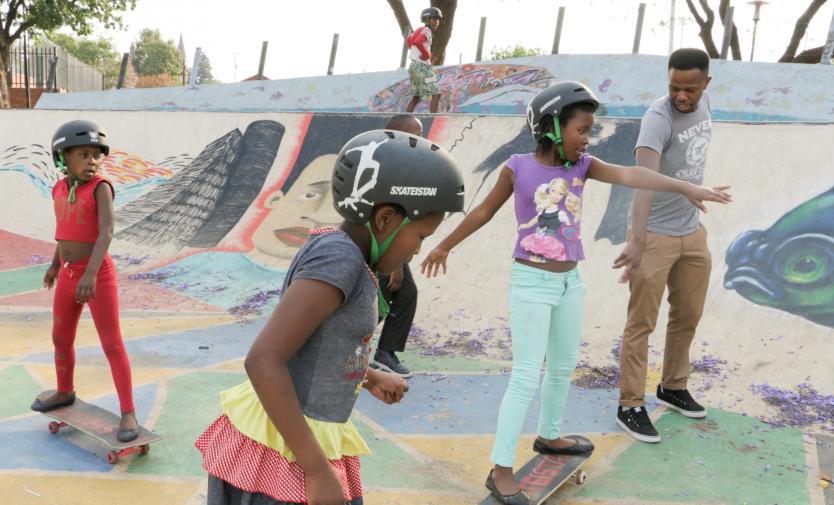
Running structured skate sessions can be useful for:
Remember to have a two-minute huddle with all staff, volunteers and Youth Leaders before each skate session. Use this time to decide how the class will be split into groups after the warm up and what tricks/skills the students will be learning in what group and what area of the park.
This will make the class far less stressful and chaotic to manage, will utilise the capacity you have with the amount of staff in the skatepark, and create a safer and more managed, structured environment for the kids to learn in.
Overview of a typical skate lesson:
Check out this example for a 1-hour beginner skateboarding lesson. You can adapt this to fit your location and needs.
Always remember – If you are bored then so are they!
Playing games on skateboards make lessons more fun. Games also help participants learn to control their board, balance, and keep an eye out for others around them within the skatepark, which helps reduce crashes and injuries in the long run. Games can help to minimize the chaos during a busy session, for example by having some of the beginners practice on a balance board outside the skatepark.
Tip: Show don’t tell. Act out the game to make sure everyone understands.
Other benefits of playing skate games include:
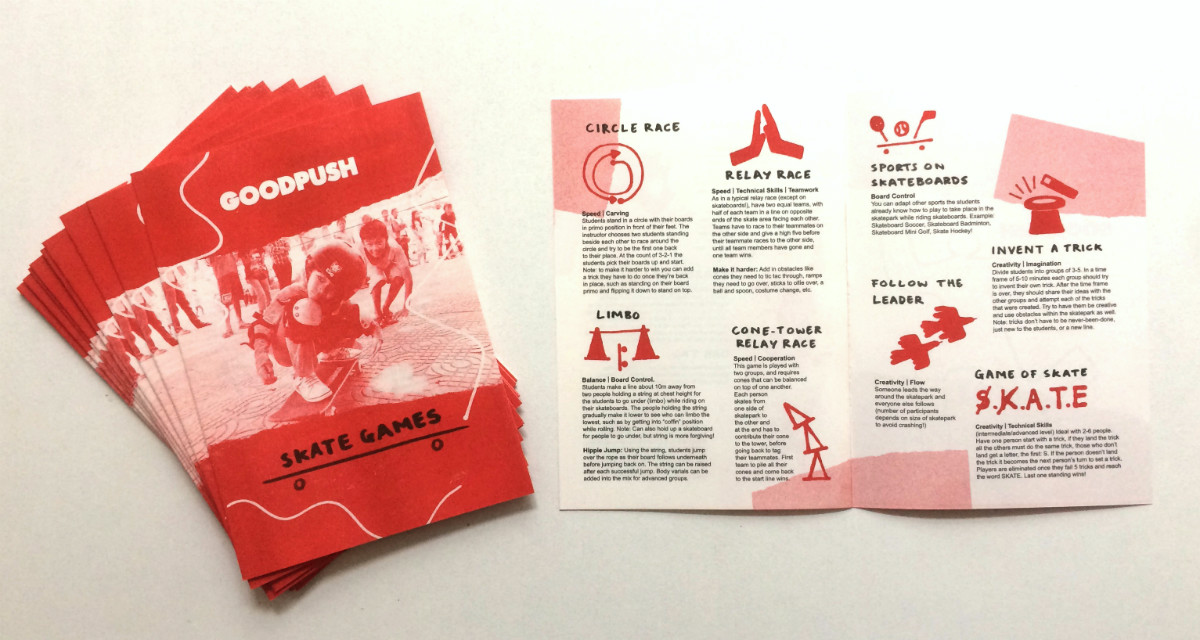
The Goodpush Skate Games Booklet features 20 game ideas that all involve skateboarding somehow. Click here to see the Skate Games Booklet (PDF) and use it in your next skate lesson!
Show us your skate games in action by tagging @thegoodpush in your social media!
Other languages available:
If you'd like to volunteer to translate the Skate Games Booklet into another language, email goodpush(at)skateistan.org!
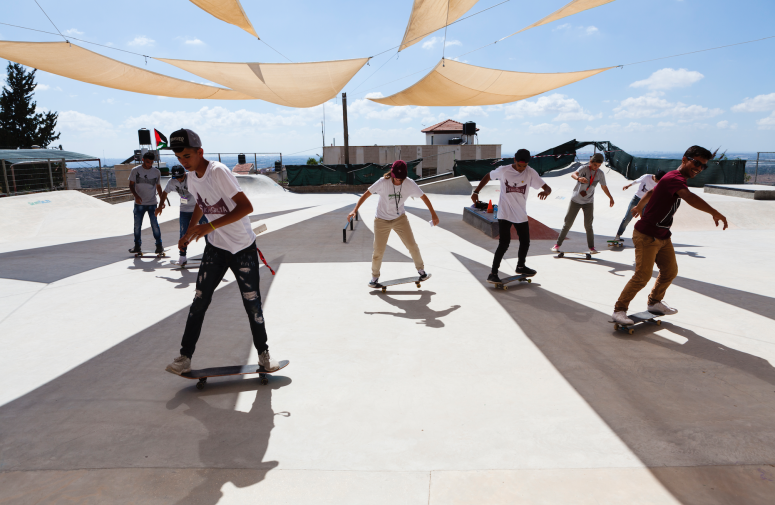
While it can be tempting to give away skateboards, these will very likely wear down over time, get stolen, be left in the rain or not be maintained properly. Most skate projects have a limited amount of equipment to work with and want to make the most their boards.
Tips for “Loaner” skateboards:
Maintenance
Regularly check all the obstacles, pads, helmets, skateboards, and other equipment in the skatepark and make sure they’re not damaged or worn out. If you find anything that is unusable or needs repairs it is crucial to separate them from the rest of the materials in the skatepark and repair or replace them. It’s also worth doing a workshop with participants and volunteers about board maintenance, such as setting up a board, and taking care of it (not getting it wet or letting it launch into walls).
Skatepark tidiness is also important; it will help make your inventory checks run faster and smoother as well making it safer to skate. If the ramps are damaged and you’re unsure of what steps to take to fix them, ask people who have more experience with carpentry and ramp building.
If your skate location has movable objects it’s a good idea to mix up the layout of the ramps every month or so to keep the skatepark from getting old and predictable for the skaters.
Storage
Skateboards and other equipment should be stored in a secure location. Access to the skateboard storage should be given to the as few people as possible. The risk of items going missing goes up as more people have access and there is less clear accountability for the storage space and contents.
It’s useful to do regular inventory checks of how many shoes and skateboards you have in the skatepark. Keep it simple: organize shoes by size, and count skateboards by the number of usable set-ups for lessons. Make sure to keep a document on hand that can be easily updated if you need to use any parts within the storage to replace or fix any boards in the skatepark. This will make it easier to track when you need to get new skateboard parts as you will know exactly what you have at all times.
In case you haven’t found a good location to run your skate programs yet, here are some ideas.
Options:
Extra tips:
1. If you don't have any rules yet at your skatepark, organize a session together with the kids where you brainstorm rules together and have kids create posters or a painted sign to put up in the space.
2. Using our Skate Session Template, design a 1 hour skate session with 20 kids and 3 staff/volunteers. It can be helpful to draw an outline of your skatepark first. Check out this filled in example below from Skateistan Cambodia.
3. Learn more! Now that you know the basics of running a skateboarding program, check out our new (and free) Goodpush E-Course on Trauma-Informed Programs. It's a great introduction to running safe programs which acknowledge the intricacies of working with vulnerable youth.
4. If you're not tired yet! You can finish with our E-Course on Mental Health and Wellbeing in skateboarding programs. This online module provides an introduction and background to the topics of mental health and youth program design. It was designed specifically with sport for development programs in mind, but can be useful for anyone working with children and young people.

Goodpush
Skatepark Rules – Example (PDF)
1-Hour Beginner Skateboarding Lesson – Example (PDF)
Skate Session Planning Template
Skate Trick Cards (PDF)
Dream Skatepark Worksheet
Skate Games Booklet – French
Skate Games Booklet – German
Skate Games Booklet – Italian
Skate Games Booklet – Malay
Skate Games Booklet – Persian
Skate Games Booklet – Portuguese
Skate Games Booklet – Turkish
Skate Games Booklet – English
Skate Games Booklet – Kurdish
Goodpush Child Protection Toolkit
External
Public Skatepark Development Guide (Tony Hawk Foundation)
How-to: Concrete Skatepark Construction (Skateparkguide.com)


