.png)
Banner image by Norma Ibarra
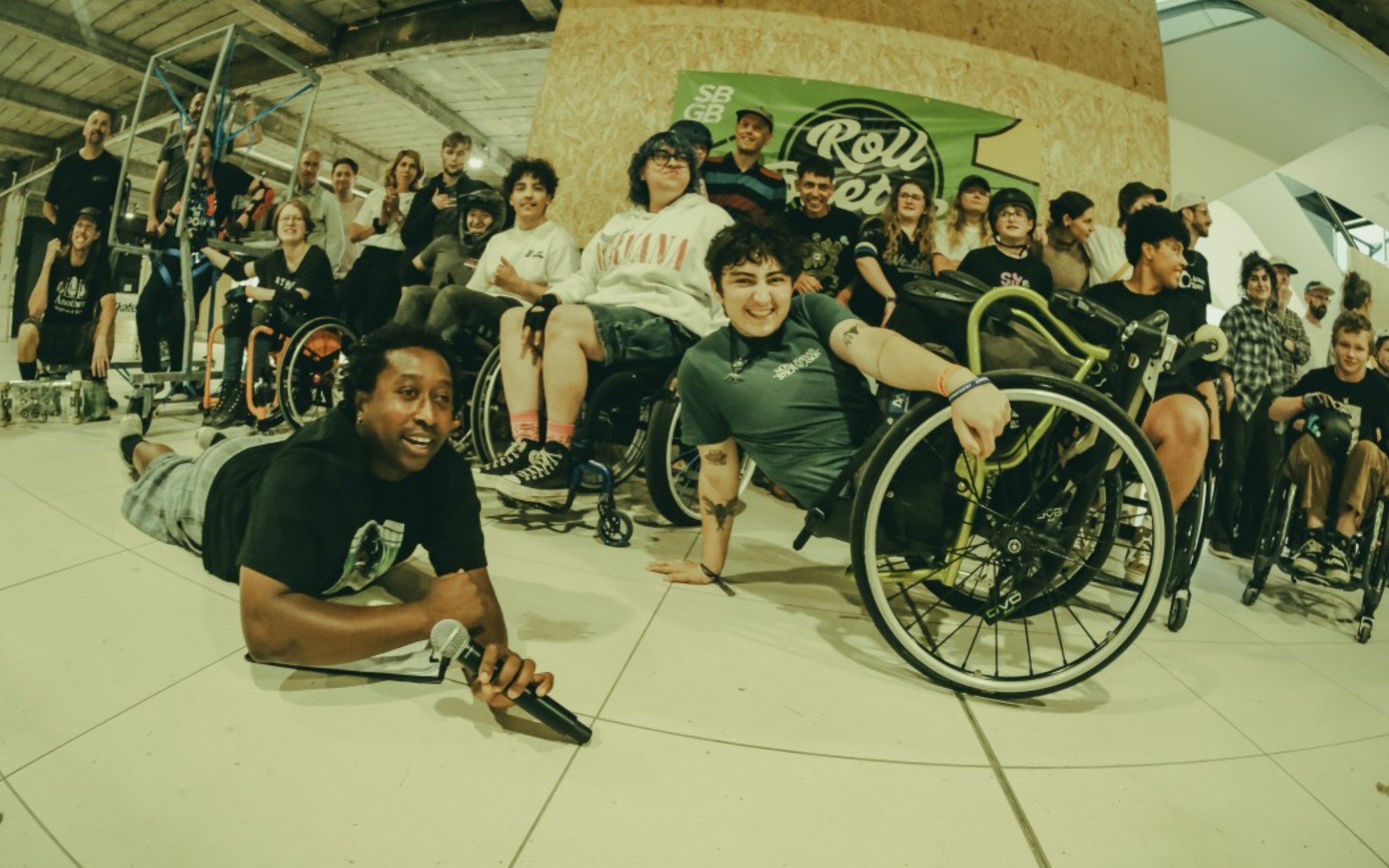
Over three days, attendees shared experiences, challenges, ideas, and future plans for their skate projects working across diverse contexts – from rural Indigenous communities, healthcare settings, schools, to refugee settings, small villages, big cities, resourced and underresourced areas.
While each person’s story was unique, as usual with social skateboarding, there were shared perspectives and experiences which connected us all. Across discussions on inclusion, mental health, physical wellbeing, sustainable careers, and collective impact, one thing was emphasized by all: social skateboarding goes far beyond the skatepark. In fact, it can be a pathway to profession and livelihoods, improved wellbeing, and finding community.
For the 150 people that gathered in London, skateboarding has changed their lives in one way or another, and that’s why they’re now dedicating their time and energy to share that with others.
Here are four lessons we took away from this year's Summit.

One of the strongest messages throughout the Summit was that creating inclusive spaces is not something that happens over night. It requires intentional effort, stepping outside of your comfort zone and learning from diverse experiences. It's an ongoing practice of learning, listening, and adapting.
"It's all well and good putting a sign up, but if you invite disabled skaters to an event and you don't have a disabled toilet, nobody's going to come back. It's not an accessible space." – Griffin Given, Transkaters (UK)
We learnt from the speakers on the first panel, Leave No Skater Behind: Inclusive Skate Spaces and Community Care*, that despite working in very different contexts (Morocco, the Philippines, Mexico, and the UK), they all shared similar experiences. Their projects were born from gaps they personally experienced: facing gender discrimination, navigating inaccessible spaces for WCMX riders and adaptive skaters, exclusion of trans+ communities, or lacking the access to basic skate equipment.
*All panel recordings and full panelist details are included below
Their examples of adapting programs, finding shipping solutions to get skateboards and gear to underresourced locations, engaging marginalized communities and creating safer environments all showed just how much impact can be created when opportunities are spread more equally and more doors to skateboarding are opened.
Daryl Dominguez put it perfectly sharing pro skater and Olympian Margielyn Didal’s story:
“Here's a Filipino skateboarder that's really come from a very low-income background. She got into skateboarding because her mum was a street vendor and was at the local skatepark selling food and Margie would annoy people and borrow their boards until one day all the local skaters were like, "Who's got trucks? Who's got bearings? Who's got a board? Let's put a setup together and let's give one to her." And look at her, she is absolutely shining.
So to tie that back into Push Philippines, that's kinda our ethos. It's really hard for me to talk about what we do at Push Philippines without using Margie as sort of the utmost ambassadorial role to what we do, because she is an example of what opportunities you can create by just creating access to things like skateboarding.”
True inclusion means understanding the barriers people face and actively working to remove them.

When people talk about successful projects, they often focus on big budgets and attendance numbers. Yet throughout the Summit, speakers repeatedly pointed to something else as the key to a long-term, healthy project that creates lasting change: relationships.
"The people that you work with in skateboarding are what make it sustainable." - Bella Warley, Skateboard GB (UK)
"The main cause of our suffering is relationships and the main cause of our healing is relationships.” - Sophie Friedel, Drop In Ride Out (Germany)
With an absolute A-Team line up, the panel on mental health in skateboarding (Joel Pippus, Rose Archie, Sophie Friedel, Susie Crome, chaired by N.A from Skater Uktis) discussed both the opportunities and responsibilities involved in supporting wellbeing through skateboarding. A central theme was that skateboarding's greatest mental health benefit often comes through the relationships that can be built there. These include relationships between a young person and their trusted coach, peer to peer relationships, and relationships within a team or collective.
Again and again, the speakers returned to the importance of connection: connection to people, culture, community, purpose, and place. While skateboarding itself can be powerful, the relationships built around it are often what help people feel seen, valued, and supported.
"Skateboarding is often talked about as a sport or an art form. But for many people, it's also a lifeline, a source of identity, healing, friendship, expression, and belonging." - N.A, Skater Uktis (UK)
The panelists reflected on how skateboarding creates opportunities for connection between people who might otherwise never have met. Skateparks and spaces can be real melting pots where we have the opportunity to chat and connect with new people and people very different to us. This experience can be so grounding and this interrelational dynamic can be such a powerful way to coach: giving young people the space and freedom to skate, play, and explore the space while simply being present to check in with them, notice small signs/changes in behaviour and just listen to what they have to say.
"I think a lot of people just want to be listened to." - Rose Archie, Nations Skate (Turtle Island a.k.a. Canada)
Skateboards are a great tool for bringing people together, but relationships are what keep communities thriving. And let us not forget that in order to support other people’s wellbeing, we also need to look out for our own wellbeing too. Creating healthy boundaries, care routines and habits in our own lives means that we’ll be able to show up more consistently for the people we support.

Many social skate initiatives begin through passion, volunteer effort, and a desire to address unmet needs within a community. While this passion is often what gets projects off the ground, the panelists of the sustainability panel also spoke honestly about the challenges that come with long-term community work. The host of the sustainability panel, Tom Critchley, opened the discussion with the all-important question: “how can we build around our love for skateboarding and try and centre that in our lives as much as possible? Because I think most people in the room will probably agree that it is a place we'd like to be in terms of our career.”
Unfortunately, the social skate sector is still incredibly underresourced in comparison to other sport-for-good sectors focused on more traditional sports (particularly football/soccer). We see year-in-year-out in our Annual Survey of Social Skateboarding Projects Worldwide that many projects around the world run regular programs and reach many young people on little-to-no budget. In our most recent survey, we saw that 23% of projects operate with no budget at all or an annual budget of less than $5,000 USD. Let’s be real: no project can survive for too long on pure passion and grit. It’s amazing what can be achieved on very little resources but without financial and emotional support it is incredibly hard to sustain this over time.
Linking back to the previous point about relationships and support systems, the panelists highlighted how community itself can become a source of sustainability; sharing examples of creating opportunities for people within their own skate communities.
"We have people within our community who are going to now do social media, photograph and film the event, or do the logistics and planning... once we feel like we are in a position that we have a budget, we automatically prioritize them to come forward first." - Anveer Mehta, Skate Life Goa (India)
Norma Ibarra is a perfect example of how to creatively build a career around skateboarding. Instead of relying on a single outlet, she has woven skateboarding into her work across social impact, photography, travel, and marketing, creating multiple pathways for professional growth.
“My goal was to travel the world documenting skateboarding communities…and that has allowed me to have what feels sustainable for me right now because I'm not paying rent. Instead, I'm going from event to event, gig to gig, volunteering, documenting events, teaching. Every week looks different… But when I was asked whether there's such a thing as a sustainable career, I think it looks different for everybody. It starts with mental health and having the resources to make sure you're happy with what you're doing. It's about doing the things that make you happy.” - Norma Ibarra, Ucanskate (Mexico/Canada)
Norma emphasized that there is a whole ecosystem of opportunities around skateboarding that could be tapped into that fit in with the social side of skateboarding or can exist alongside it: "We don't want just professional skaters. We need photographers. We need marketers. Accountants. Therapists. Everything." Essential to this point though, and as Norma stressed, these positions need to be filled by diverse people and more opportunities made equitable for women, BIPOC communities and those with less access to opportunities.
Sustainable social skate projects are rarely built by individuals alone. They are sustained by communities of people who support one another, share responsibility and opportunities, and recognise when it's time to ask for help.
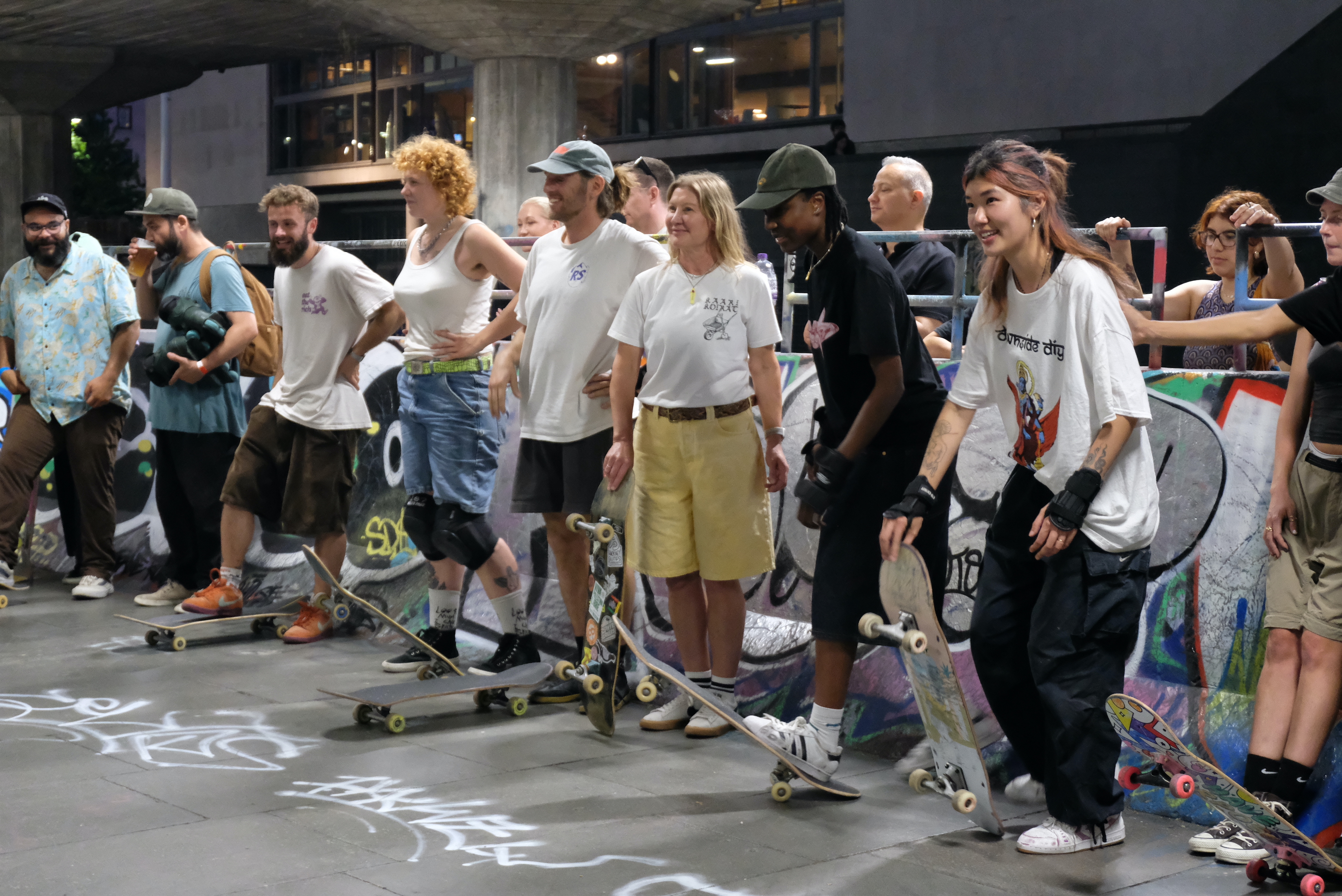
In the Collective Impact session, Rhianon Bader from the Goodpush/Skateistan introduced the Goodpush Collective Theory of Change, a framework developed collaboratively with more than 50 organizations worldwide. The aim was to identify the common goals that unite social skate projects across different countries, cultures and contexts, while creating shared ways of measuring progress and learning from one another.
A key message was that although projects look very different on the surface, many are working towards similar outcomes: improving inclusion, health and wellbeing, education, and organizational capacity. By developing shared frameworks and shared measurement approaches, projects can better understand their impact, strengthen their programs, learn from one another, and make a stronger case for support from the wider community.
"I think it's a very special part of social skateboarding that we're focused a lot more on collaboration than competition." - Rhianon Bader, Skateistan / Goodpush
Unlike many sectors that rely heavily on competition, social skateboarding has built a culture of knowledge sharing, peer support, and collective problem-solving. What became clear throughout the Summit is that no single organization is creating change alone. The strength of social skateboarding lies in its willingness to collaborate, share knowledge, and grow together. As the movement continues to evolve, this collective approach may be one of our greatest assets. By collecting shared evidence and demonstrating common outcomes, social skate projects can build recognition for skateboarding as a legitimate and effective tool for social change.
"We have to look at the small changes that happen every day at the project because they may look small from the outside but they are very important in the development of our children and our teenagers… We see autonomy, we see responsibility, we see cooperation, confidence, courage to try, ability to ask for help." - Albertos Santos, Love CT (Brazil)
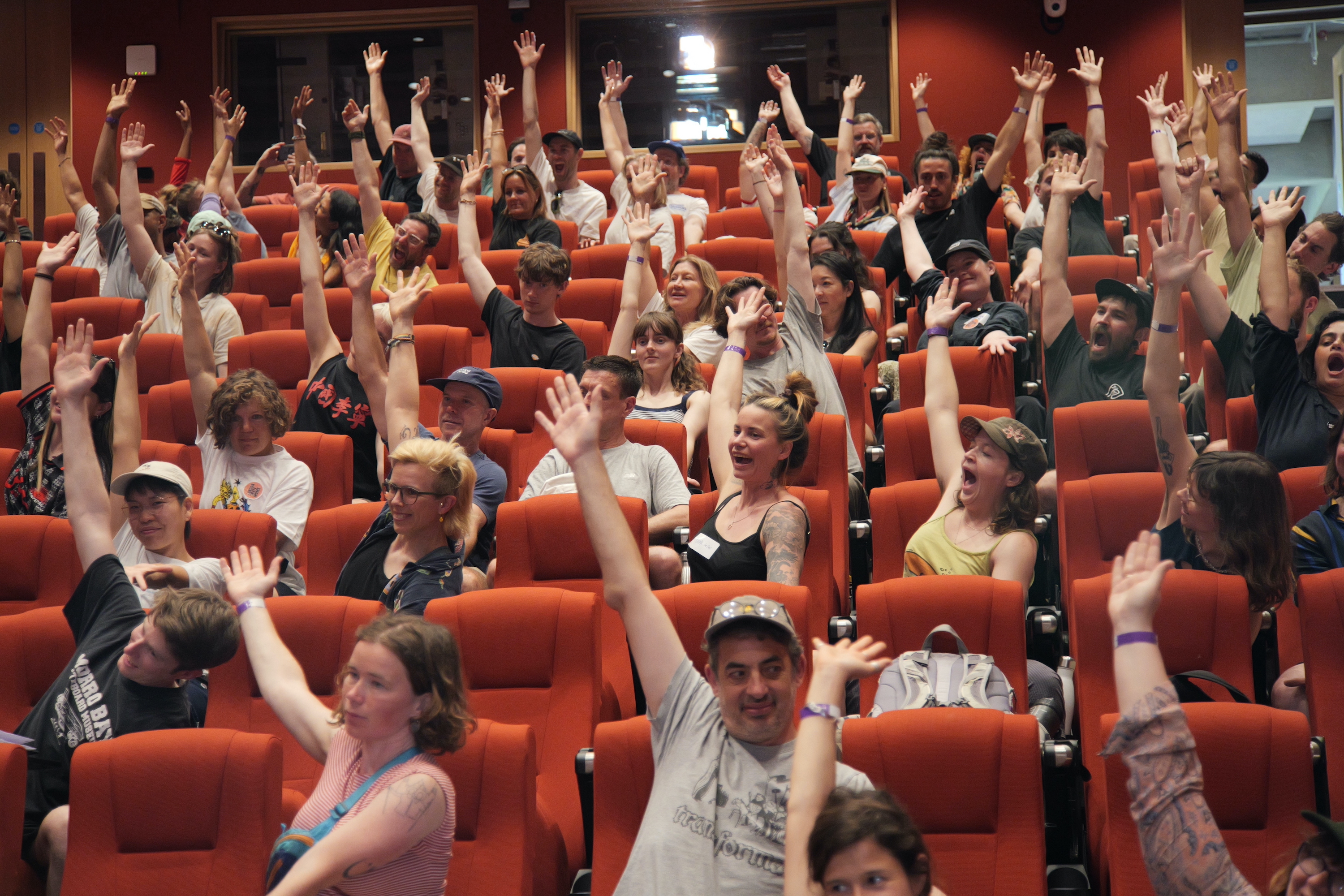
The Social Skate Summit demonstrated the incredible diversity, creativity, and commitment that exists across the global social skate community. While projects operate in different countries, cultures, and contexts, many are working towards the same vision: healthier, more inclusive, more connected communities where people have opportunities to grow, belong, and thrive.
The conversations that took place during the Summit reminded us that skateboarding is not simply a sport, activity, or culture. It’s a tool for building relationships, creating opportunities, strengthening communities, and supporting positive social change. The challenge now is to navigate an evermore difficult funding landscape and take these lessons forward – continuing to learn from one another, strengthen collaboration, and ensure that the benefits of skateboarding reach even more people around the world.
Host: Yusra Alageli - Mama Skate CIC (UK)
Speakers:
Host: Tom Critchley - Concrete Jungle Foundation (UK)Speakers:
Host: Rhianon Bader - Goodpush/Skateistan
Speakers:
Host: Noorzai Ibrahimi - Skateistan (Afghanistan/Canada)
Speakers:
Host: N.A. - Skater Uktis (UK)
Speakers: